
"water ions"
300 article(s) found

What kind of water tastes best for coffee? The answer is here.
Water is an important element in the extraction of coffee. More than 98% of a cup of brewed coffee (except espresso) is water, which accounts for a considerable proportion. There are many kinds of water we use to make coffee, such as RO water, tap water, mineral water, hard water and soft water. Wait, wait. Isn't water?

Water Quality Index Affects Coffee Flavor
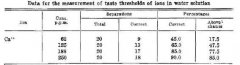
Even if it is the same TDS water, the soluble solids contained in it will not be the same, so it is possible to be the same in flavor? The problem may come back to the minerals themselves. Because there are many metal cations and anions in water, the common salty taste is mainly sodium ion. According to the periodic table, if the alkali metal ions similar to it can pass through the separation,
SCAA Coffee extraction and TDS Water quality requirements Coffee extraction skills
Water with the same TDS (total amount of dissolved solids, English: Total dissolved solids) will not contain the same composition of soluble solids, so is it possible to be the same in flavor? The problem may come back to the minerals themselves. Because there are many metal cations and anions in the water, the common salty taste is mainly sodium ions, according to the cycle.
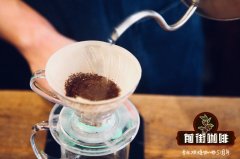
What is the effect of water quality on coffee extraction? Is TDS as low as possible? The Ca,Mg ion concentration is
Professional coffee knowledge exchange more coffee bean information Please follow the coffee workshop (Wechat official account cafe_style) Carbonate system generally refers to the factors related to water quality: TDS, hardness (GH), pH value, buffer index (KH), metal content, especially calcium and magnesium. In order to test the use of water for brewing coffee, the above factors and their interactions must be fully taken into account when evaluating the use of water for brewing coffee.
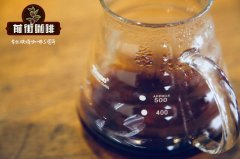
How much water do you know we use to make coffee every day?
Professional coffee knowledge exchange more coffee bean information Please follow the coffee workshop (Wechat official account cafe_style) Carbonate system generally refers to the factors related to water quality: TDS, hardness (GH), pH value, buffer index (KH), metal content, especially calcium and magnesium. In order to test the use of water for brewing coffee, the above factors and their interactions must be fully taken into account when evaluating the use of water for brewing coffee.

What kind of water do you use to make coffee? Will pure water make coffee sour? Can I make coffee with mineral water?
Maybe you are using good coffee beans, and the brewing parameters are all right. But there is always some negative flavor in a cup of coffee. Then it's probably the water. You might say that water is colorless and tasteless, up to the drinking standard, isn't it all the same? Then you may have ignored the existence of minerals. Calcium ions, magnesium ions and carbonic acid are more or less found in impure water (distilled water).

What is the effect of water quality on the flavor of caffeine?
Professional coffee knowledge exchange more coffee bean information please follow the coffee workshop (Wechat official account cafe_style) it is well known that more than 98% of a cup of coffee is water, the effect of water on coffee taste can be imagined, the effect of water quality on coffee can be divided into three main categories: 1 water pH (PH value) 2 water soluble matter (TDS) 3 water hardness (calcium and magnesium ion content in water
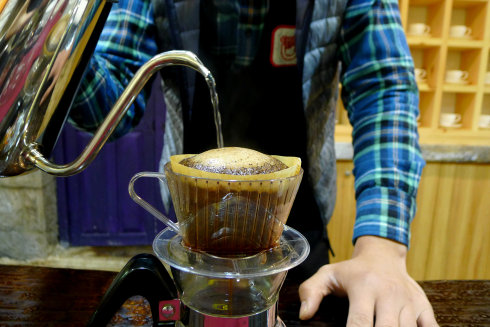
The skill of Italian Coffee Mechanism in making Coffee Water softening
Picture: Qingdao Xiumen Coffee-Laoshan Store (East Tel:6778.8860, 2km Road, south of Binhai Avenue Tunnel) Italian coffee machine is usually installed with a set of water treatment system, which mainly includes two steps, purification and softening. Purification, also known as filtration, is sometimes three-stage filtration. Softening is scientifically defined as the process of removing calcium and magnesium ions from water. Italian style

Home brewing coffee filter kettle Brita instructions Brita filter kettle assembly steps
For professional baristas, please pay attention to the coffee workshop (Wechat official account cafe_style) Brita manual 1. First of all, Brita is a portable water filter produced by a famous German water filtration company, which is sold in major shopping malls in China. The price of this section is about 400-500 yuan. two。 Wash your hands with soap and remove the filter element from the package; Note: the filter element is a little damp

Factors affecting the quality of espresso-an introduction to the extraction of American coffee
The factor affecting the quality of espresso-the extraction of American coffee-the factor of water quality is often ignored. The essence of coffee beans is extracted, mainly affected by calcium ions, magnesium ions and bicarbonate ions in water. A perfect filtration system can not only keep these mineral ions within a reasonable range, but also reduce our coffee.
What is coffee water? What's the best water to use to make coffee? What are the standards for specified water use for coffee?
Professional coffee knowledge exchange more coffee bean information Please pay attention to the water quality of coffee in the coffee workshop (Wechat official account cafe_style), which directly affects the taste, aroma, consistency and many other health elements of all coffee. The key influencing factor is the mineral composition in the water. Christopher Hendon, a doctoral student from the Chemical Technology Center of Bath University, used to work in his spare time.

What kind of water is better for making coffee? the quality of coffee, the factor of making coffee.
According to the study of SCAA American Fine Coffee Association, the standard of water is fresh, clean, colorless and odorless, and the numerical range is acceptable when the Ph value is 6.5-7.5 and TDs [1] is before 75-250mg/L, and the optimal water quality is when TDS is 150mg and LMagne Ph is 7. In addition, there are certain requirements for the content of calcium ion, alkaline ion and sodium ion in water. Today's fine coffee

Practical information | Translation of Handbook of Professional baristas (8) Water
Professional baristas exchange please pay attention to the coffee workshop (Wechat official account cafe_style) "Professional baristas Handbook" author: Scott Rao translation: uncle Dewa chapter VIII hydrochemistry in the boutique coffee industry, hydrochemistry has not received the attention it deserves. You may have heard that 98.75% of coffee is water, but few people realize the effect of water on it.

The Professional Barista's Manual (VIII) Water for Brewing Fine Coffee
Chapter 8 Water Chemistry In the specialty coffee industry, water chemistry does not get the attention it deserves. You may have heard that 98.75% of coffee is water, but few people realize how much water affects the remaining 1.25%. Carbon-filtered water alone may taste good, but Kenya, where you bid for it at a high price, is brewing it with this water.

Translation of the selected chapters of the Professional baristas Handbook | Chapter 8 the relationship between water and coffee
Professional barista communication please pay attention to the coffee workshop (Wechat official account cafe_style) hydrochemistry 101in the boutique coffee industry, hydrochemistry has not received the attention it deserves. You may have heard that 98.75% of coffee is water, but few people realize how much water affects the remaining 1.25%. Carbon-filtered water may taste good alone.
How to make a good siphon coffee
1. Siphon coffee is best made without hot water or boiled water, because the more dissolved oxygen in the water (there is almost no dissolved oxygen in hot and boiled water) and the higher the hardness of calcium and magnesium ions in the water (calcium and magnesium ions, not copper, iron, lead and mercury ions), the deeper the metasomatism replacement reaction between water and the good substances in coffee powder, the easier it is to replace the good taste. I added a high calcium and magnesium ion here.
How to make a good siphon coffee
1. Siphon coffee is best made without hot water or boiled water, because the more dissolved oxygen in the water (there is almost no dissolved oxygen in hot and boiled water) and the higher the hardness of calcium and magnesium ions in the water (calcium and magnesium ions, not copper, iron, lead and mercury ions), the deeper the metasomatism replacement reaction between water and the good substances in coffee powder, the easier it is to replace the good taste. I added a high calcium and magnesium ion here.
How to make a good siphon coffee by brewing coffee
1. Siphon coffee is best made without hot water or boiled water, because the more dissolved oxygen in the water (there is almost no dissolved oxygen in hot and boiled water), the higher the hardness of calcium and magnesium ions in the water (calcium and magnesium ions, not copper, iron, lead and mercury ions). The deeper the metasomatic replacement reaction between water and the good substances in coffee powder, the easier it is to replace the good taste. I added a high calcium and magnesium ion here.
How much do you know about the water needed to make coffee every day?
As we all know, the water used for brewing has to be filtered by carbon and has no peculiar smell, but this is only the basic requirement of high-quality brewing water. In order to get better coffee (or tea, Espresso), the water used should be neutral pH, with a certain hardness, alkali content, and total dissolved solid content (TDS). The following are hydrochemical terms related to coffee making. Total dissolution
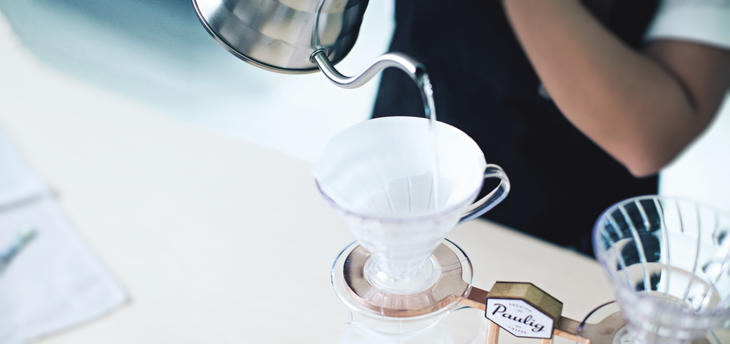
Coffee brewing water science-is there really the most suitable water quality for coffee brewing?
Professional coffee knowledge exchange more coffee bean information Please pay attention to the water quality of coffee in the coffee workshop (Wechat official account cafe_style), which directly affects the taste, aroma, consistency and many other health elements of all coffee. The key influencing factor is the mineral composition in the water. Calcium, magnesium, sodium, potassium and other mineral ions in water will affect the thermokinetic extraction of coffee.